

A Kid does not have to be using alcohol, nicotine, or other drugs to encounter them.
They may see a vape in a gaming stream. An influencer may joke about getting drunk. A short video might make substance use look funny, normal, or harmless. Friends may share pictures from a party. A product may appear in a post without looking much like an advertisement at all.
For many families, the first conversation about substances now starts with something a Kid saw on a screen.
That can actually be useful.
You do not need to wait until you find a vape, smell alcohol, or discover that something has already happened. A post, video, meme, or news story can give you a low-pressure way to talk about what your Kid is seeing and what they think about it.
The Substance Abuse and Mental Health Services Administration’s “Talk. They Hear You.” campaign encourages parents and caregivers to begin conversations about alcohol and other drugs early and keep them going over time. SAMHSA emphasizes that strong, open relationships with parents can influence the choices young people make around substance use.
Quick Take
When drugs, vaping, or alcohol show up in your Kid’s digital world:
- ask what they’re seeing before assuming what they believe
- explain health risks in plain language
- help them notice when content is advertising, entertainment, or peer influence
- be clear about your family’s expectations
- give them practical ways to handle pressure
- keep the conversation open enough that they can come back later
- take actual use or signs of a problem seriously without turning the first conversation into a courtroom
A lecture may end the discussion quickly.
A series of short, direct conversations gives you more chances to shape how your Kid thinks.

Substance Use Can Look Very Normal Online
Digital content often strips away the boring or harmful parts of substance use.
A video may show the party but not the hangover.
A vape may appear as a colorful accessory rather than a nicotine product.
Someone may talk about getting high as a joke without showing the anxiety, impaired judgment, school problems, dependence, or other consequences that can come with substance use.
Research has found associations between young people’s exposure to substance-related content on social media and their own risk behaviors. A large systematic review and meta-analysis involving more than 1.4 million adolescents found that exposure to social-media content depicting health-risk behaviors was associated with higher odds of alcohol use and electronic nicotine delivery system use. The researchers were careful to note that many of the underlying studies were observational, so these findings do not prove that social media exposure by itself causes substance use.
For parents, the practical takeaway is simpler:
What Kids repeatedly see can shape what feels common, accepted, or worth trying.
That makes media literacy part of substance-use prevention.
Vaping Deserves Its Own Conversation
Vapes can be especially easy for Kids to misunderstand.
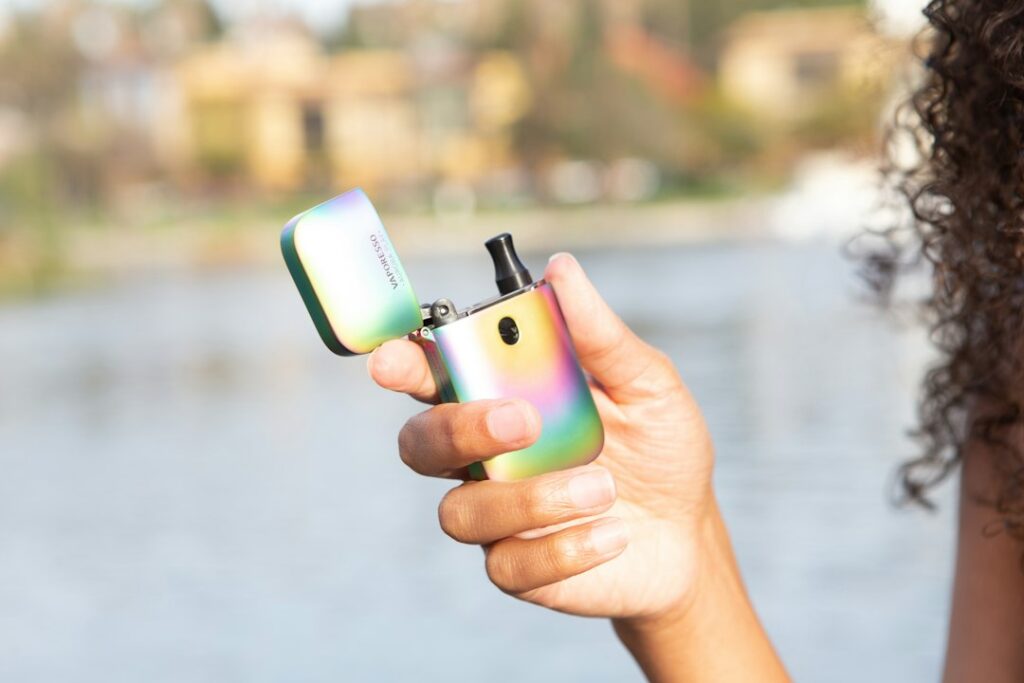
Some devices are small, brightly designed, flavored, and easy to conceal. Social posts may emphasize flavors, tricks, aesthetics, or social belonging rather than nicotine.
According to the CDC’s guidance on why young people vape, youth vaping is influenced by several factors, including advertising, appealing flavors, social influences, and nicotine itself. CDC also reports substantial exposure to e-cigarette-related marketing and social-media content among young people.
Current national data show that youth vaping has declined from earlier peaks, which is encouraging. Even so, e-cigarettes remain the most commonly used tobacco product among U.S. middle and high school students. In the 2025 National Youth Tobacco Survey, about 1.44 million students reported current e-cigarette use.
ou do not need a dramatic speech about vaping.
Try something direct:
“You probably see people vaping in videos or at school. What do kids your age think about it?”
Then listen.
Their answer may tell you whether vaping is seen as dangerous, normal, embarrassing, cool, no big deal, or simply everywhere.
From there, you can add facts.
For example:
“A lot of vapes contain nicotine, and nicotine can be addictive. I don’t want advertising or other kids deciding for you that it’s harmless.”
That sounds very different from:
“If I ever catch you vaping, you’re grounded forever.”
One opens the door. The other usually closes it.
Alcohol Content Can Make Drinking Look More Common Than It Is
Alcohol appears throughout entertainment and social media.
Sometimes it comes from brands. Sometimes influencers post it. More often, it may simply be friends, older siblings, celebrities, or other users sharing ordinary-looking pictures and videos.
A 2024 systematic review and meta-analysis found a relationship between young people’s exposure to or engagement with alcohol-related social-media content and alcohol use. Research in this area consistently points to an association, while still leaving questions about how much is cause, effect, peer selection, or a combination of factors
There is no reason to turn every picture with a beer in it into a family meeting.
Instead, help your Kid question what a post leaves out.
You might ask:
“What do you think that video is trying to make drinking look like?”
“What parts of the night aren’t in the post?”
“Do you think seeing this over and over makes it seem more common?”
That teaches your Kid to evaluate the message instead of simply absorbing it.
The National Institute on Alcohol Abuse and Alcoholism explains that the adolescent brain continues developing into the 20s and may be particularly vulnerable to alcohol exposure. Alcohol can also affect judgment and increase the likelihood of risky decisions and injuries.
You can give Kids accurate information without exaggerating.
Facts tend to hold up better than scare tactics.
Start Before You Think You Need To
Parents sometimes wait for a reason to discuss drugs or alcohol.
There are several problems with that approach.
By the time a Grown-Up has a concrete reason, the Kid may already have formed opinions from friends, social media, entertainment, older students, or advertising.
SAMHSA recommends starting early and using many short conversations rather than one intimidating “big talk.” Everyday moments—something on television, a news story, a social post, or a question from your Kid—can make the topic easier to approach.
A conversation with a 10-year-old might be:
“Vapes can look like candy or gadgets, but many contain nicotine. If somebody ever offers you one, you can always tell me.”
With an older Kid, the conversation can become more specific:
“If you’re ever somewhere people are drinking or using something and you want out, call me. We’ll handle the rest afterward.”
The information changes as Kids grow.
The open door should stay the same.
Be Clear About Your Expectations
Warm conversations do not require vague rules.
Kids benefit from knowing where the family stands.
Adults should communicate clear disapproval of underage drinking and drug misuse while also showing that the concern comes from care for the child’s health and future.
That can sound like:
“I don’t want you vaping.”
“You’re not old enough to drink, and I expect you not to.”
“Don’t take pills or other substances that weren’t prescribed or given to you appropriately.”
Then explain why.
“I’m not saying that because I think you’re a bad Kid. I’m saying it because these choices can affect your health and put you in situations you aren’t prepared for.”
Kids may disagree.
They may roll their eyes.
They may tell you everyone else thinks differently.
You can still be clear without turning the discussion into a fight.
Ask What They’re Seeing, Not Just What They’re Doing
A question like:
“Are you doing drugs?”
does not give you much information unless the answer happens to be yes.
Broaden the conversation.
Ask:
- “What substances are kids at school talking about?”
- “Do you see vaping much in your feed?”
- “Are there creators who make drinking or getting high look funny?”
- “What do kids your age think is risky and what do they think is harmless?”
- “Have you ever seen something online about drugs that you weren’t sure was true?”
The CDC’s current parent resources on teen substance use recommend creating a calm, nonjudgmental space and using natural openings—such as something in the news or media—to begin conversations about drugs, alcohol, and mental health. CDC
These questions also give Grown-Ups a clearer picture of the environment around their Kid.
You may learn far more from “What are people saying?” than from “Have you done it?”
Teach Kids to Notice the Sales Pitch
Substance-related content does not always look like advertising.
A product may appear casually in the background. A creator may show a brand without discussing health risks. A post might highlight flavors, packaging, parties, humor, or lifestyle.
Help Kids develop a few questions they can use whenever they see this kind of content:
Who made this?
Are they selling something?
Are they being paid or sponsored?
What do they want me to feel about the product?
What information is missing?
Would this still look appealing if the health risks were shown too?
This is especially useful with vaping. CDC identifies marketing and advertising as one contributor to youth vaping, alongside flavors and social influences.
Teaching Kids to recognize persuasion gives them another tool besides simply telling them, “Don’t believe everything online.”
Give Them an Exit Plan for Peer Pressure
Eventually, the situation may move from a screen to real life.
A friend offers a vape.
Someone brings alcohol to a sleepover.
An older Kid offers a pill.
A group says:
“Just try it.”
Kids handle those moments better when they have already thought about what to do.
SAMHSA recommends helping young people practice strategies for avoiding alcohol and other drugs, including ways to leave uncomfortable situations and reach a trusted adult.
Give your Kid simple options:
“No thanks.”
“I’m good.”
“I don’t vape.”
“I’m not taking that.”
“My ride’s here.”
You can also establish a family escape plan.
Maybe your Kid can text a code word and you call with an excuse.
Maybe they know you will pick them up without starting the argument in the car.
There can be a conversation about what happened later.
First, get them out safely.
If You Discover Your Kid Has Used Something
Finding a vape, alcohol, marijuana, pills, or another substance can bring up fear and anger quickly.
Before the conversation, learn what you actually know.
Did they try something once?
Are they using regularly?
Was there pressure from friends?
Are they using a substance to cope with stress, anxiety, depression, or another problem?
Do you know what the substance actually was?
The CDC’s Free Mind resources for parents and caregivers encourage adults to approach concerns about substance use and mental health with compassion, accurate information, and continued conversation.
A useful opening is:
“I found this. I’m concerned, and I need to understand what’s happening.”
Then let the Kid speak.
You can still set consequences. You can still enforce rules. You can still be upset.
But hearing the full story first gives you a better chance of responding to the actual problem.
Know When to Bring in More Help
Occasional exposure to substance-related content and ongoing substance use are very different situations.
Talk with a pediatrician, counselor, or another qualified professional if you’re concerned about repeated use, cravings, withdrawal, intoxication, major changes in mood or behavior, school problems, or substance use tied to anxiety, depression, or other emotional difficulties.
Substance use and mental-health challenges can overlap in adolescence, and current guidance from the CDC encourages families to seek additional support when concerns move beyond what they can comfortably address at home.
For families in the United States, SAMHSA’s Find Help resources include confidential treatment locators and the National Helpline at 1-800-662-HELP (4357).
If a Kid is unconscious, having trouble breathing, experiencing a seizure, or may have taken a dangerous amount or unknown substance, seek emergency medical help immediately.
How Socialeyez Can Support the Conversation
Substance-related content requires context.
Seeing a video that contains a vape does not mean a Kid is vaping. Reading about a drug for a school project is different from trying to buy one. A joke, advertisement, news story, and direct offer are not interchangeable situations.
While Protection is active, Socialeyez can use information visibly present on a Kid’s screen to identify meaningful digital moments. Depending on what is visible, substance-related content may contribute to a Behavior Insight or other information that helps a Grown-Up understand what appeared on the screen.
When visible information suggests a more serious safety concern, Socialeyez can surface that appropriately.
The app cannot determine off-screen behavior from a screenshot, and it should not assume that seeing something means a Kid participated in it.
Socialeyez is most useful when the information becomes a starting point:
“I want to understand what you saw.”
rather than:
“I already know what you did.”
Keep the Conversation Bigger Than Drugs
Talking about vaping, alcohol, and drugs is also a conversation about judgment.
Who influences you?
What makes something look normal?
How do you know when someone is trying to sell you something?
What do you do when your friends want something you don’t?
Who can you call when you’re stuck?
Those skills extend far beyond substance use.
Kids will encounter questionable claims, risky trends, advertising, social pressure, and people making choices they don’t want to copy.
You cannot pre-screen every post.
You can help your Kid become better at deciding what deserves their attention—and what deserves a hard pass.
0 comments